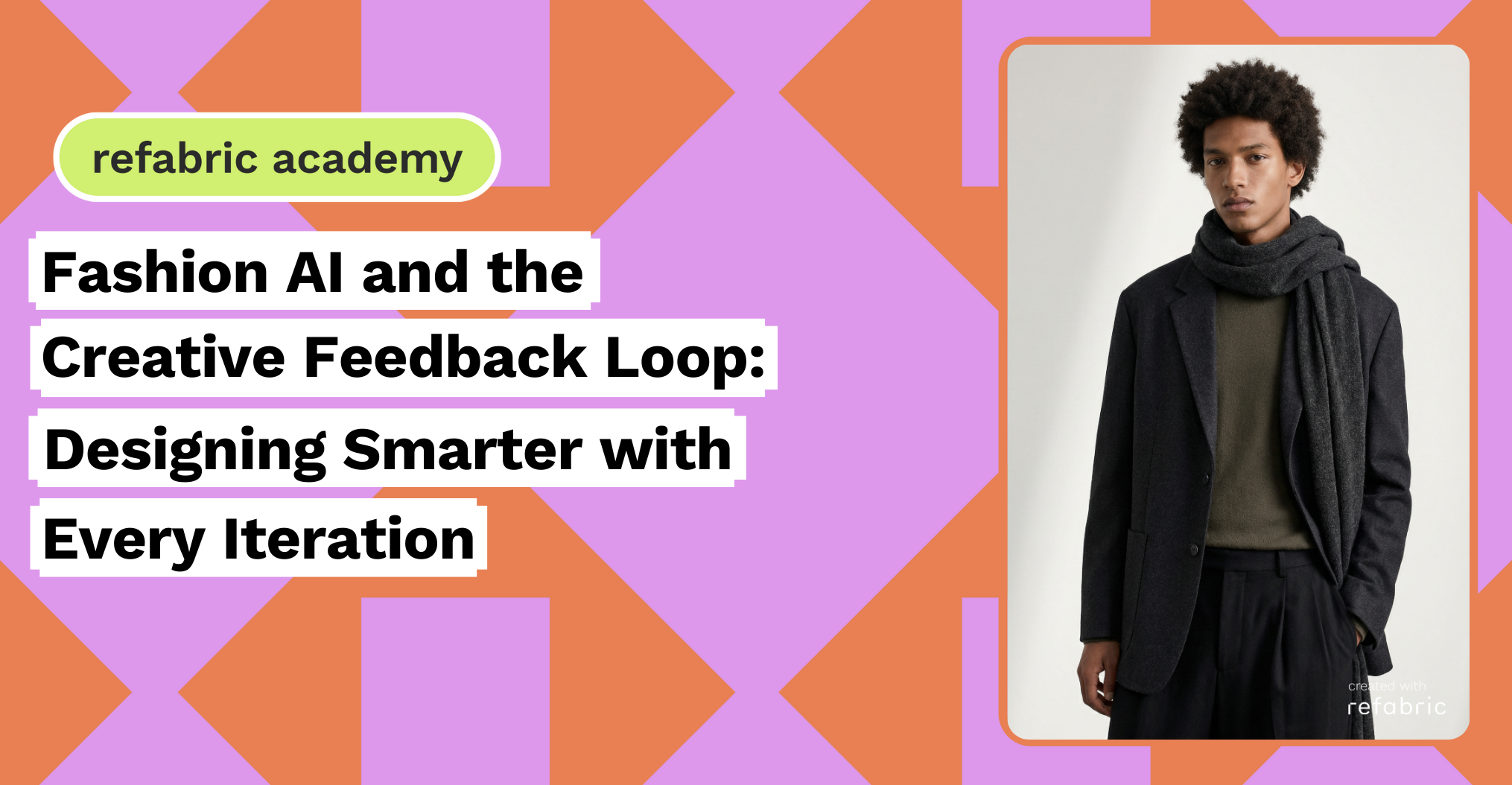
Fashion AI is no longer just a tool for speeding up design workflows; it has become an active participant in the creative process, learning, adapting, and improving with every iteration. As fashion brands face growing pressure to innovate faster, reduce waste, and stay closely aligned with consumer expectations, the ability to design smarter, not just quicker, has become essential. This is where the creative feedback loop powered by fashion AI steps in, turning data into an ongoing dialogue between designers, products, and audiences.
From Static Collections to Living Systems
Traditionally, fashion collections were static outcomes of intuition, trend research, and seasonal planning. Once a collection launched, feedback arrived late and often indirectly, through sales reports or reviews. Fashion AI transforms this linear model into a living system. By analysing past collections, sell-through rates, returns, and consumer sentiment, AI systems build a memory of what worked, what didn’t, and why.
This historical awareness allows designers to approach new collections with clarity rather than guesswork. Instead of starting from a blank slate every season, creative teams can iterate on proven elements, silhouettes, colour palettes, fabric choices, while still leaving room for experimentation. The result is not creative limitation, but creative confidence.
How the Fashion AI Feedback Loop Works
At the core of this process is the feedback loop. Fashion AI gathers signals from multiple touchpoints: customer interactions, market performance, regional preferences, and even micro-trends emerging on digital platforms. These signals are then translated into actionable insights that feed directly back into the design phase.
For example, if a specific cut performs exceptionally well across different markets, fashion AI identifies the pattern and highlights its transferable qualities. If certain styles consistently underperform or generate high return rates, those signals inform adjustments early in the design process. Over time, the system becomes more accurate, learning how creative decisions connect to real-world outcomes.
Fashion AI as a Creative Collaborator
One of the most compelling shifts is how fashion AI reframes the designer’s role. Rather than replacing creativity, it acts as a collaborator that surfaces possibilities humans might overlook. Designers remain the visionaries, setting direction, mood, and identity, while AI supports them with insight-driven suggestions.
This collaboration enables faster prototyping and smarter iteration cycles. Designers can test multiple variations digitally, evaluate predicted performance, and refine ideas before moving into sampling or production. The creative process becomes more fluid, responsive, and informed, without losing its emotional or artistic core.
Learning from Consumers Without Chasing Them
Consumer feedback has always influenced fashion, but fashion AI allows brands to listen without blindly chasing trends. By distinguishing between short-term noise and long-term behavioural patterns, AI helps brands respond thoughtfully rather than reactively.
This means understanding not only what consumers buy, but how they engage, how preferences shift across seasons, and how context influences choice. Over time, fashion AI builds a nuanced picture of audience behaviour, enabling brands to evolve their creative language while staying true to their identity.
Iteration as a Sustainable Advantage
The creative feedback loop also supports more responsible design practices. When decisions are informed by real performance data, overproduction decreases and resources are allocated more efficiently. Iteration becomes a sustainability strategy, allowing brands to refine designs instead of discarding them.
Fashion AI makes it possible to learn from every drop, capsule, or collection, ensuring that knowledge compounds rather than resets each season. This long-term learning mindset is especially valuable in an industry where speed and responsibility must coexist.
Designing Forward with Fashion AI
Fashion AI turns creativity into an ongoing conversation, between past and future collections, between designers and consumers, and between intuition and insight. By embedding learning into every iteration, brands can design with intention, agility, and depth.
As the creative feedback loop continues to evolve, fashion AI stands as a powerful ally for designers who want to build smarter systems without sacrificing imagination. In this new model, every design decision becomes a chance to learn, refine, and move forward with purpose.