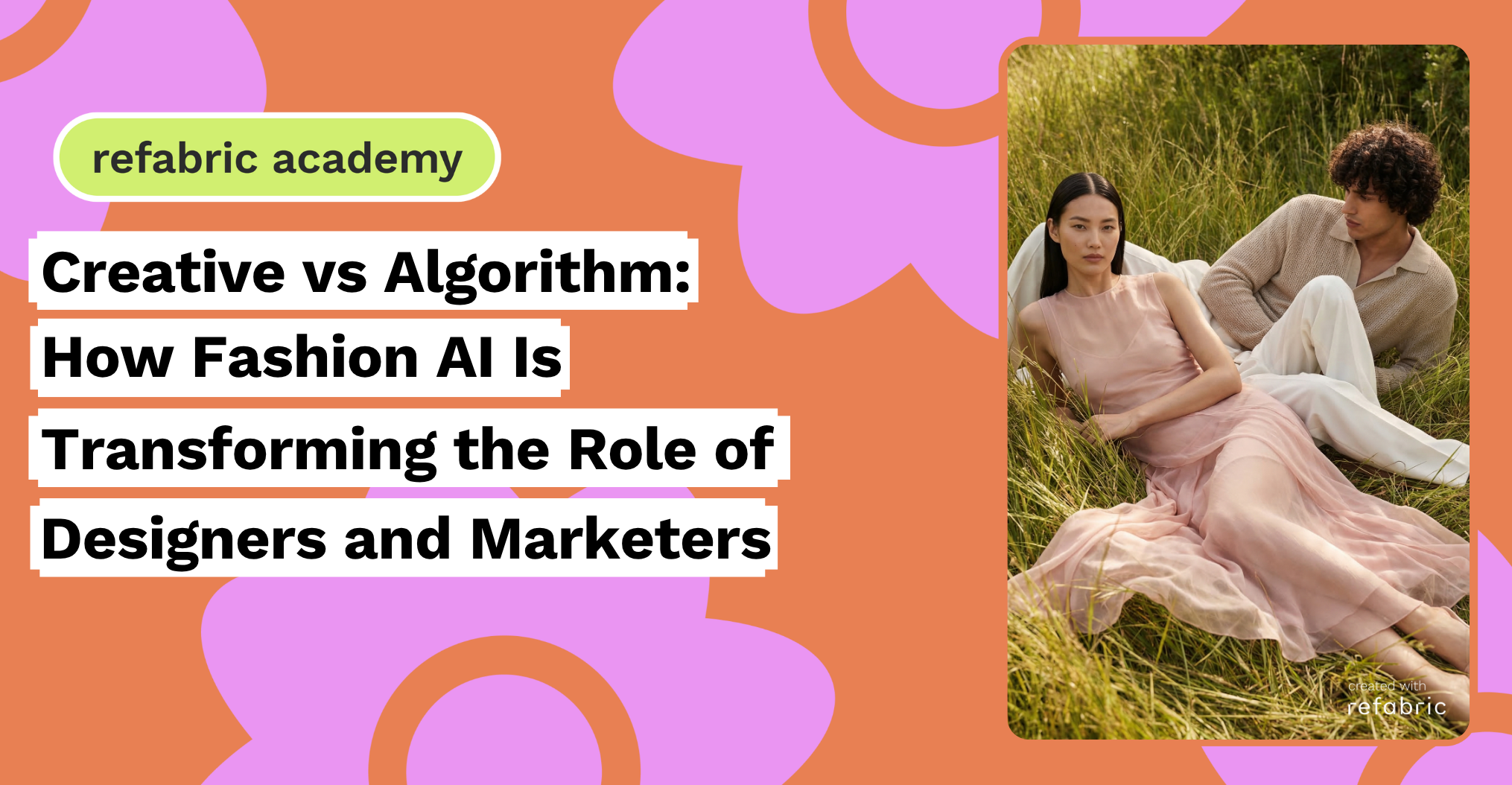
In today’s rapidly evolving industry, fashion AI is redefining the balance between human creativity and algorithmic precision, ushering in a new era where designers and marketers collaborate with intelligent systems to unlock unprecedented innovation.
The traditional image of a fashion designer sketching ideas by hand or a marketer relying solely on intuition is being reshaped by the integration of AI-driven tools. Rather than replacing human ingenuity, fashion AI enhances it, providing deeper insights, accelerating workflows, and enabling more informed creative decisions.
At Refabric, we see this shift firsthand as designers and teams move toward more connected, intelligent workflows that bring creativity and data together in real time.
How Fashion AI Is Redefining Creativity and Strategy
Fashion AI is not about choosing between creativity and algorithms, it’s about merging the two into a powerful hybrid model. Designers are now equipped with tools that analyze global trends, historical data, and consumer preferences in real time, allowing them to create collections that resonate more deeply with audiences.
AI in fashion design enables rapid prototyping and visualization, turning concepts into digital garments within minutes. This allows designers to experiment freely, iterate quickly, and refine their vision without the constraints of traditional production timelines. As highlighted in recent industry insights, AI-driven design processes allow brands to create collections faster and more accurately while aligning closely with consumer demand. Platforms like Refabric enable this shift by bringing design, inspiration, and data into a single environment where ideas can be explored and executed without friction.
At the same time, marketers are leveraging fashion AI to craft highly targeted campaigns. By analyzing customer behavior, purchase history, and even social media interactions, fashion AI empowers marketing teams to deliver personalized messaging at scale. This shift transforms marketing from a broad, generalized effort into a precise, data-informed strategy.
Designers as Creative Directors of Intelligent Systems
One of the most significant changes brought by fashion AI is the evolution of the designer’s role. Instead of focusing solely on manual creation, designers are becoming creative directors of intelligent systems.
They guide fashion AI tools by setting parameters, curating outputs, and injecting their unique aesthetic vision into the process. The result is a collaborative workflow where AI generates possibilities, and designers refine them into cohesive collections.
This partnership expands creative boundaries. AI can suggest unexpected color combinations, innovative silhouettes, or culturally inspired patterns that might not emerge through traditional methods alone. Designers remain at the heart of the process, but their capabilities are amplified through technology.
Marketers as Data-Driven Storytellers
For marketers, fashion AI introduces a new level of precision and creativity. Campaigns are no longer based solely on seasonal trends or intuition, they are powered by predictive analytics and real-time insights.
AI tools help marketers identify emerging trends before they peak, enabling brands to stay ahead of the curve. They can also segment audiences with incredible accuracy, tailoring campaigns to specific demographics, preferences, and behaviors.
This data-driven approach enhances storytelling. Instead of generic messaging, brands can create narratives that feel personal and relevant to each consumer. The result is stronger engagement, higher conversion rates, and deeper brand loyalty.
Bridging the Gap Between Art and Analytics
Fashion has always been a blend of art and commerce, but fashion AI brings these elements closer together than ever before. Designers and marketers are no longer working in silos; instead, they are connected through shared data and insights.
For example, insights gathered from marketing campaigns can directly inform design decisions. If AI identifies a growing preference for certain styles or materials, designers can incorporate those elements into upcoming collections. This creates a seamless feedback loop where creativity and strategy continuously inform each other.
Additionally, fashion AI streamlines operations across the entire value chain from design and production to marketing and sales. Automated processes reduce inefficiencies, allowing teams to focus on higher-level creative and strategic tasks. Our approach focuses on removing friction from this process, enabling teams to move fluidly from insight to creation without breaking their creative flow.
The Future: Collaboration Over Competition
The narrative of “creative vs algorithm” is quickly becoming outdated. The future of fashion lies in collaboration, where human talent and artificial intelligence work hand in hand.
Designers bring emotion, cultural understanding, and artistic vision. Marketers contribute storytelling and brand positioning. Fashion AI adds speed, precision, and data-driven insights. Together, they form a dynamic ecosystem that drives innovation and growth.
As the industry continues to evolve, those who embrace this synergy will lead the way. Fashion AI is not just a tool, it’s a transformative force that empowers professionals to push boundaries, explore new possibilities, and redefine what’s possible in fashion.
In this new landscape, creativity doesn’t compete with algorithms, it thrives alongside them.